

Choosing a stainless steel plate supplier often comes down to price and availability.
That approach works until something goes wrong.
Most issues do not appear at the quote stage. They tend to surface later during processing, fabrication, or inspection, when timelines are tighter and options are limited. By that point, small gaps in sourcing, handling, or preparation can turn into real delays.
Here is what to pay attention to.
Inventory Depth and Availability
“Available” can mean different things depending on the supplier.
In some cases, it means material is physically in stock. In others, it means the supplier expects to source it from a mill. That distinction has a direct impact on timing and consistency.
When material is not on the floor, lead times can shift quickly. It also becomes harder to support repeat orders if the same size or thickness is no longer accessible.
Buyers should confirm what is actually in stock today, what sizes and thicknesses are commonly carried, and whether the supplier can support ongoing demand.
Reliable inventory reduces variability and helps keep projects moving without interruption.
Processing Capabilities
The condition of the material on arrival plays a direct role in how efficiently fabrication can begin.
Cutting method, flatness, and edge quality all affect downstream work. If those elements are not right, additional steps are often required to correct them.
Common capabilities include waterjet, laser, or plasma cutting, along with machining, drilling, beveling, and flattening.
When these processes are handled in-house, there is stronger control over tolerances and scheduling. When they are not, each additional handoff introduces more time and increases the chance that something is missed or misaligned.
Packaging and Handling
Material condition on arrival matters more than most buyers expect.
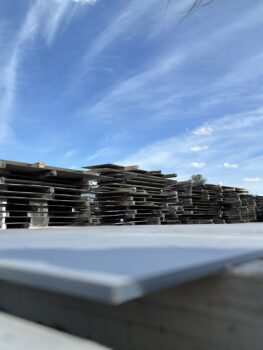
Even when the right material is supplied and processed correctly, poor packaging can lead to surface damage, edge deformation, or handling issues during unloading. That creates additional work before fabrication can even begin.
Stainless plate often requires protection beyond standard freight practices. This can include protective coverings, proper stacking, secure banding, and packaging methods that account for weight, size, and how the material will be handled at delivery.
Buyers should understand how material will be packaged, how it will be protected in transit, and whether packaging aligns with the application requirements.
Consistent packaging helps ensure the material arrives in the same condition it left the supplier, ready for use.
Material Integrity and Traceability
Documentation issues rarely show up early. They tend to surface during inspection, when they are much harder to resolve.
For many applications, traceability is not optional. Buyers need to know exactly what material they are receiving and be able to verify it without delay.
This includes maintaining heat-level traceability, providing complete and accurate Material Test Reports, and ensuring documentation aligns with both the material and the order requirements.
If something does not match, it can hold up inspection, delay fabrication, or require replacement material.
Quoting Speed and Accuracy
Fast quotes are useful, but only when they reflect the full scope of the job.
Missed details at this stage often lead to change orders, schedule adjustments, or additional machining once the material is in process.
A strong supplier will take the time to understand the application, confirm processing requirements, and clarify tolerances before finalizing the quote.
That extra attention upfront helps avoid problems later.
Lead Time and Execution
Lead time is directly tied to how much of the process the supplier controls.
If material needs to be sourced, processed externally, or transferred between multiple vendors or locations, timelines can shift without much warning.
When more of the work is handled under one roof, there is greater visibility into the process and more flexibility when changes occur.
Buyers should understand where processing is performed, how adjustments are handled once an order is placed, and how proactively issues are communicated.
Consistency in these areas is what keeps projects on schedule.
A Practical Checklist for Buyers
Before placing an order, it helps to confirm a few basics.
Is the material in stock or being sourced?
Can required processing be completed in-house?
Will full documentation and traceability be included?
Are tolerances and fabrication requirements clearly defined?
Is the lead time dependent on outside vendors?
Clear answers to these questions reduce the likelihood of surprises later.
A stainless steel plate supplier does not just impact what shows up on the dock.
It shows up in how the material cuts, how it fits during fabrication, and whether anything gets flagged during inspection. That is where gaps in sourcing, processing, or documentation start to surface.
By that point, the job is already moving.
The work done upfront is what determines whether it keeps moving or slows down.
Have a question on a specific requirement? We can walk through it with you. Contact a Sandmeyer expert here.